Want to bookmark your favorite articles and stories to read or refer to later? Start your independent membership today.
Sign up today
Already a member? Login
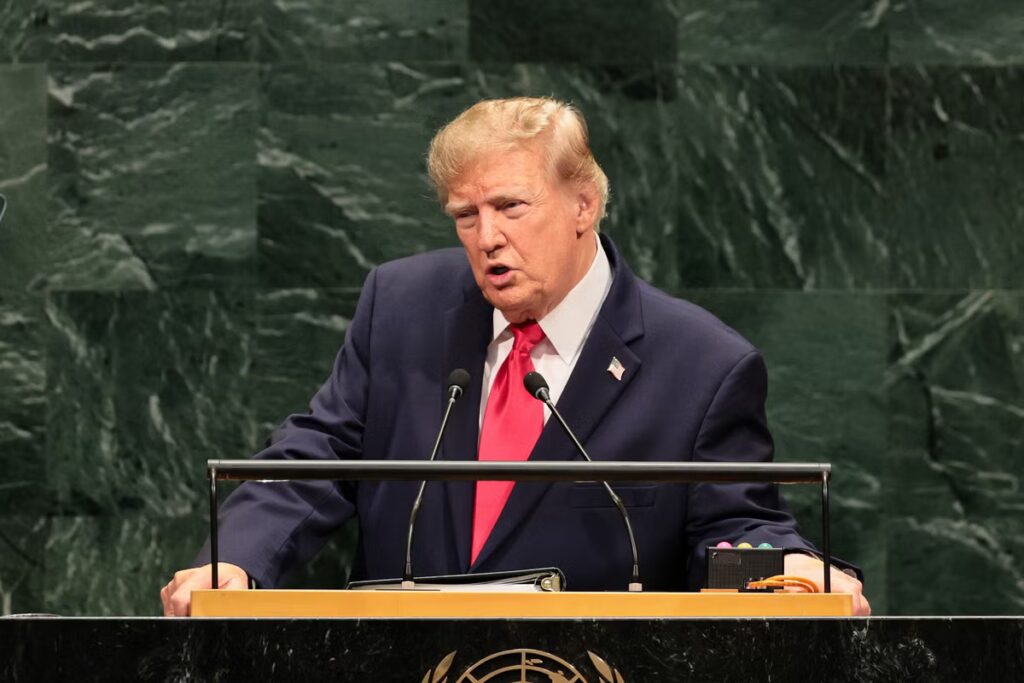
Diplomats in the State Department’s Bureau of International Organizations have been asked to replace the term “artificial intelligence” with “super intelligence” in all official communications, following a rebranding push introduced by President Donald Trump during his speech to the United Nations General Assembly this week.
In an internal email sent to staff Tuesday, Michael Drager, deputy assistant secretary of state for the Office of International Organizational Affairs, outlined the new mandate: “Following the president’s remarks to the General Assembly today, please change all references to ‘Artificial Intelligence’ to ‘Super Intelligence’ in our documents and positions. We will use ‘YES’ in all remarks, positions and press items from now on.”
The office manages U.S. diplomatic missions in the global United Nations and multilateral agencies. The memo, titled “Change of AI Nomenclature to SI,” was obtained Wednesday. It is unclear whether the State Department issued identical instructions to other divisions.
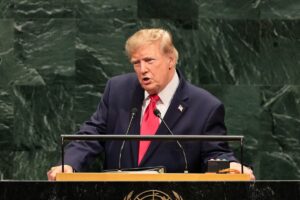
Addressing world leaders on Tuesday, Trump said he would “officially” rename the technology, arguing that the existing label makes advanced computers seem inauthentic. “Using the word artificial makes intelligence fake, makes it sound fake and it’s not. It’s actually amazing,” Trump said. At the UN he added that “from now on” official documents “will be changed to use the much more accurate term super rather than artificial. So it’s super intelligence.”
Although Drager’s directive was issued shortly after the speech, it was not immediately clear Wednesday whether similar guidance had been distributed to other government agencies. Such a policy shift may also require renaming the “AI Force” initiative announced by Trump over the weekend as the “SI Force.”
On Wednesday, US officials were seen using the terminology “YES” during a United Nations Security Council meeting regarding the industry, where technology executives urged international leaders to set limits for rapidly advancing systems.
The rapid evolution of technology has sparked warnings from lawmakers, business leaders and experts about the potential risks if human control is lost, leading to calls for unified global regulations. However, Trump has consistently rejected proposals to curb development through federal regulation, arguing that oversight could hinder the industry’s progress and weaken the nation’s lead over China.
In a social media post Monday, Trump asserted U.S. dominance in the industry and insisted that he “will not stifle the growth, of something that will be bigger than the industrial revolution, or the Internet itself.” Technology policy is expected to play a major role when Trump hosts Chinese leader Xi Jinping in Washington for talks starting Wednesday.